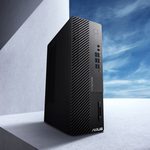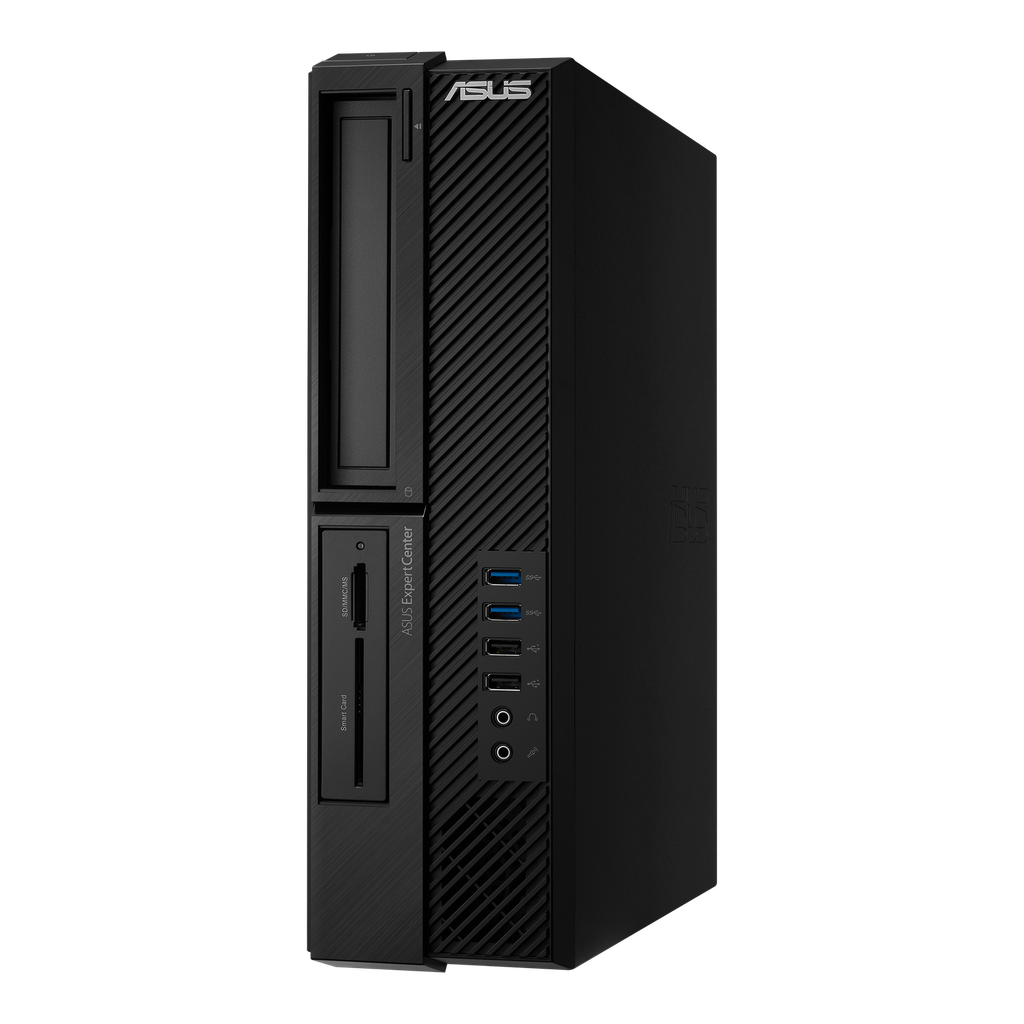
Image Source: ASUS Official
Who Is It For?
The ASUS ExpertCenter D9 is for individuals and organizations that require a durable, secure, and expandable desktop for professional work. It fits the needs of office administrators, software developers, and data analysts who need a machine that can run for long periods and support multiple monitors. The inclusion of four memory slots and extensive port options makes it a tool for those who plan to keep their computer for several years and may need to increase its capabilities over time. It is not for those who prioritize a small, stylish home computer or for those who want a dedicated gaming machine with standard, easily swappable retail parts.
“If this form factor or power doesn’t quite fit your daily work, exploring other lineup categories would be a better path.”
1. Check Before You Buy
The ASUS ExpertCenter D9 is a desktop computer designed for professional and enterprise environments where reliability and security are prioritized. Unlike consumer-grade desktops, this series undergoes MIL-STD 810H durability testing, which involves exposing the hardware to vibrations, shocks, and temperature extremes. This physical construction is a permanent characteristic of the series and influences the long-term stability of the internal connections. The D9 series is available in two distinct sizes, and the choice between them determines the future upgrade path for the machine.
Chassis Size and Internal Expansion
The Tower (D900TE) model provides the most internal volume, allowing for full-height expansion cards and multiple storage drives. It features four DIMM slots for memory, which can support up to 128GB of DDR5 RAM. This is a significant technical detail because it allows the computer to handle very large datasets or many simultaneous applications. The Small Form Factor (D900SE) model also features four memory slots but is limited to “low-profile” expansion cards. These cards are half the height of standard cards, which limits the selection of graphics cards or network adapters that can be installed after purchase.
Tool-Free Maintenance and Internal Access
The D9 series features a tool-free chassis design. The side panel can be removed by loosening thumb screws or using a quick-release latch, and the internal drive bays often use plastic clips instead of metal screws. This design allows for the quick replacement of a hard drive or the addition of more memory without the need for a screwdriver. Inside the case, the components are organized to allow airflow from the front intake to the rear exhaust. In the Tower model, there is significant empty space to facilitate this airflow, while the SFF model uses a more compact arrangement with a dedicated plastic shroud to direct air over the processor.
Proprietary Power Supply and Motherboard
The motherboard and power supply in the ExpertCenter D9 use proprietary designs tailored to the specific chassis. The power supply unit (PSU) has a unique physical shape and uses specific connectors for the motherboard, rather than the industry-standard 24-pin connector. This means that if the power supply needs to be replaced outside of the warranty period, a standard retail PSU will not fit. The wattage of the PSU (300W, 500W, or 700W) is matched to the components included at the time of purchase. If a user intends to add a powerful graphics card later, they must ensure the existing PSU has the necessary wattage and power cables.
Security and Management Features
As a business-focused machine, the D9 series includes Intel vPro technology in many of its configurations. This is a hardware-level feature that allows IT departments to manage, update, and repair the computer remotely, even if the operating system is not functioning. The motherboard also includes a TPM 2.0 chip, which is a requirement for Windows 11 security features and BitLocker drive encryption. Some models also feature a physical Kensington lock slot and a padlock loop on the rear of the chassis to prevent unauthorized physical access to the internal components.
2. How It Fits a Real Desk Setup
The ASUS ExpertCenter D9 is designed to sit on or under a desk in a permanent office setup. The Tower model stands approximately 40 centimeters tall and requires a stable surface that can support its weight of nearly 8 kilograms. The Small Form Factor model is much narrower and can be placed vertically using an included stand or horizontally under a monitor. The front panel of both models features a brushed-metal texture and a vertical arrangement of ports for easy access.
Front-Panel Connectivity and Port Layout
The front of the D9 series is heavily populated with ports, typically including multiple USB-A ports, a USB-C port, and separate jacks for headphones and microphones. This allows for the connection of thumb drives, external hard drives, and headsets without reaching behind the computer. Some configurations also include a built-in Smart Card reader on the front panel, which is used for secure login in corporate or government environments. The power button is located at the top of the front panel and includes a small LED indicator to show the system status.
Acoustic Profile and Thermal Behavior
In a standard office environment, the ExpertCenter D9 operates at a low noise level. During tasks like document editing or web browsing, the internal fans spin at a minimum speed that is difficult to hear from a distance of one meter. When the processor is under a heavy load, such as during a large file encryption or a video export, the fan speed increases. The sound is a consistent hum of moving air. Because the Tower model has more internal volume, it can move air more slowly and quietly than the SFF model, which relies on smaller, faster-spinning fans to manage heat in a tighter space.
Rear Connectivity and Legacy Support
The rear of the D9 series includes a wide array of ports, including multiple DisplayPort and HDMI outputs for connecting several monitors simultaneously. A specific feature of this series is the inclusion of legacy ports, such as a Serial port, a Parallel port, or PS/2 ports for older keyboards and mice. These connections are useful for businesses that still use specialized industrial or retail equipment. The rear also houses the RJ45 Ethernet port for a wired internet connection. If the computer is placed against a wall, the cables protruding from the rear will require approximately 5 to 10 centimeters of clearance to avoid being bent or damaged.
Internal Storage Expansion Options
The D9 series supports multiple storage drives. The motherboard typically features two M.2 slots for fast NVMe SSDs and several SATA ports for traditional mechanical hard drives or 2.5-inch SATA SSDs. In the Tower model, there are physical bays for 3.5-inch drives, which are useful for bulk data storage. The SFF model is more limited, usually supporting one M.2 drive and one 3.5-inch or 2.5-inch drive. If a user adds a second drive later, they may need to provide their own SATA data cable, as these are not always included if the computer was purchased with only one drive.
3. Performance by Use Case
The following ratings are based on a middle-tier configuration featuring an Intel Core i7 processor and 16GB or 32GB of RAM.
| Use Case | Software | Rating | Reason |
| Office Productivity | Excel, Word, Outlook | Sufficient | High core count and DDR5 RAM handle large datasets easily. |
| Software Development | Visual Studio, Docker | Sufficient | 128GB RAM limit and vPro support complex dev environments. |
| Data Analysis | SQL, Power BI, Python | Sufficient | Fast NVMe storage and multi-core CPU support heavy processing. |
| Photo/Video Editing | Photoshop, Premiere | Adequate | Sufficient for editing, but limited by the specific GPU chosen. |
| 3D Modeling | AutoCAD, Blender | Adequate | Performance depends on whether a dedicated RTX GPU is installed. |
| AAA Gaming | Modern Heavy Titles | Adequate | Can run games if an RTX GPU is present, but not a gaming-first PC. |
The performance of the ExpertCenter D9 is consistent due to its robust cooling and high-quality power delivery components. However, the Small Form Factor model may experience slightly higher temperatures during sustained high-load tasks compared to the larger Tower model.
4. Official Specs (with plain explanations)
| Category | Specification | Notes |
| CPU | Intel Core i5-12500 to i9-14900 | 12th, 13th, and 14th Gen Intel processors |
| Graphics | Intel UHD or NVIDIA RTX 3060/4060 | Integrated or dedicated GPU options available |
| Memory | Up to 128GB DDR5 (4800/5600MHz) | Four physical slots, user-replaceable modules |
| Storage | Up to 2TB M.2 SSD + 4TB HDD | Multiple slots for SSD and mechanical drives |
| Dimensions | 17.6 x 39.3 x 40.9 cm (Tower) | Size varies by chassis (Tower vs. SFF) |
| Weight | Starting at 5.0 kg to 7.7 kg | Varies based on internal hardware and chassis |
| Power Supply | 300W / 500W / 700W (80+ Platinum) | Internal proprietary unit, high efficiency rating |
| Ports | USB-C, USB-A, HDMI, DP, Serial, PS/2 | Extensive front and rear physical connections |
This series is sold with different CPUs, memory, and storage depending on the release year and generation. Please match the specifications on your current seller page with the official information above.
Source: ASUS Official Product Page
The specifications listed above represent the hardware foundation of the ExpertCenter D9 series, which includes the D900TE (Tower) and D900SE (Small Form Factor) models. These components determine the physical space the computer occupies, the speed of data processing, and the limits for future hardware changes.
5. Main Variations in This Series
- The chassis comes in two primary sizes: the 27-liter Tower (TE) for maximum expansion and the 9-liter Small Form Factor (SE) for space-saving setups.
- Processor generations span from the 12th Gen to the 14th Gen Intel Core series, affecting the number of performance cores and the type of onboard security features.
- Graphics configurations range from integrated Intel chips for office work to dedicated NVIDIA RTX cards for 3D rendering or multi-monitor setups.
- Power supply units are available in different wattages, with higher-wattage versions required for configurations that include a dedicated graphics card.
- Security features vary by model, with some including a physical Smart Card reader or a Trusted Platform Module (TPM) for data encryption.
6. What to Check on the Sales Page
When reviewing a listing for the ExpertCenter D9, the specific chassis size and the internal components will determine the actual performance and expansion limits of the machine.
- Chassis Model: Confirm if the unit is the “D900TE” (Tower) or “D900SE” (Small Form Factor).
- CPU Generation: Check whether you are getting the 12th, 13th, or 14th Gen Intel Core processors.
- Memory Configuration: Verify the amount of RAM and if it is DDR5, as this affects data transfer speeds.
- Power Supply Wattage: Check if the PSU is 300W, 500W, or 700W, especially if you plan to add a GPU later.
- Included Ports: Confirm the presence of specific ports like Serial or Smart Card readers if your work requires them.
- Storage Type: Ensure the primary drive is an “SSD” or “NVMe” for fast boot times and application loading.
7. Disclaimer & Buying Advice
This buying guide for the ASUS ExpertCenter D9 is based on official manufacturer specifications and recurring real-world user experiences. It is completely independent, not sponsored, and does not guarantee specific performance for every unit. Hardware configurations such as the processor, memory, and storage can differ by generation and region, so please double-check the exact specifications listed on your seller’s page before purchasing.
8. Beginner Guide
If you are setting up a professional workstation for the first time and want to understand how to connect multiple monitors and secure your data, check out our [Start Here] page to read our basic hardware and setup guides.