
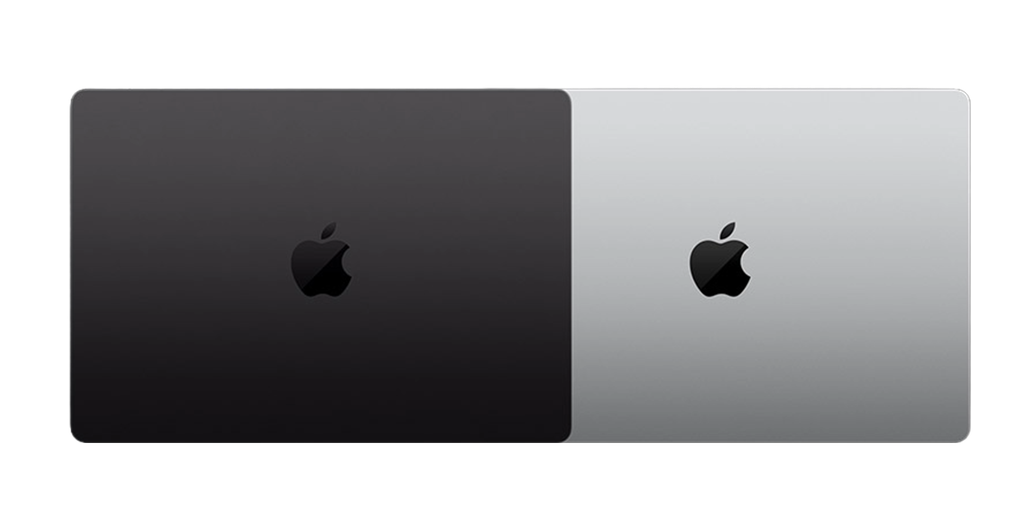
Image Source: Apple Official
Who Is It For?
The MacBook Pro 16 pairs an Apple silicon chip (M5 Pro or M5 Max) with fully soldered unified memory and storage that must be chosen at purchase. Video editors who cut multi-cam 4K or 8K timelines on the large Liquid Retina XDR display while moving between studio desks and client sites, or developers who compile large projects and then join long video calls, fit the daily pattern. Photographers and 3D artists who export large batches and need sustained battery for travel also match the flow.
The 2.14 kg body remains portable for occasional carries, yet memory and storage capacity cannot be increased later. The 100 Wh pack sustains long creative sessions away from an outlet, while native Windows applications and .exe installers are unavailable. If this form factor or power doesn’t quite fit your daily work, exploring other lineup categories would be a better path.
1. Soldered Unified Memory and Fixed Storage
Unified memory locked at purchase
Memory is soldered as unified memory shared between CPU, GPU, and Neural Engine. Configurations start at 24 GB on M5 Pro and rise to 36 GB, 48 GB, 64 GB, or 128 GB on higher M5 Max options. Once the machine leaves the factory the capacity cannot be changed. Choosing too little memory for large video libraries, 3D scenes, or multi-app creative workflows leaves no later remedy. Confirm the exact unified memory amount on the sales page before ordering.
Storage also soldered
The SSD is soldered to the board. Base options begin at 1 TB and can be configured higher (up to 8 TB on current models) only at the time of purchase. Expanding capacity afterward requires external drives or cloud storage. Verify the installed storage size listed for the chosen configuration.
MagSafe 3 and port layout
Charging uses the MagSafe 3 connector with a 140 W USB-C adapter. Three Thunderbolt 5 ports, HDMI, an SDXC card slot, and a 3.5 mm headphone jack are fixed. The number and type of ports cannot be altered after purchase. Check whether the listed model includes the full Thunderbolt 5 set and the exact adapter wattage supplied.
These constraints mean every capacity and interface decision is final at the point of sale.
2. Daily Carry Weight and Battery Routine
2.14 kg in a larger bag
The closed chassis measures 35.57 × 24.81 × 1.68 cm and weighs 2.14–2.15 kg. The size and weight fit most 16-inch sleeves and larger backpacks, yet the bulk is noticeable on longer walks or crowded public transport. Opening the lid on a café table or airplane tray leaves limited free surface for a mouse or notebook beside it.
Fan behavior and meeting environments
The advanced thermal system keeps fans silent or near-silent under web browsing, document work, and video calls. Under sustained heavy rendering or multi-cam export the fans spin up but remain quieter than most Windows workstations of similar power. In a quiet meeting the noise stays low enough for conversation.
Battery for a full workday
The 100 Wh battery supports long stretches of wireless web browsing, local video playback, or light creative work. Heavy continuous GPU or multi-core loads reduce that window, so the MagSafe cable and 140 W adapter still travel with the machine for intensive sessions.
3. Performance by Use Case
Configurations range from the M5 Pro chip through the M5 Max. All heavy creative work benefits from remaining plugged in for maximum sustained output; battery mode still delivers usable performance for many tasks but drains faster under peak load.
| Use Case | Software | Rating | Reason |
|---|---|---|---|
| Multi-cam 4K/8K video editing | Final Cut Pro, Premiere (via compatible versions) | Sufficient | Unified memory and media engines keep timelines responsive while plugged in |
| Photo editing and large-batch export | Lightroom, Photoshop | Sufficient | Fast SSD and GPU acceleration handle large libraries |
| Software development and 3D work | Xcode, terminal, Blender (compatible) | Sufficient | Multi-core CPU and high unified memory sustain concurrent builds and scenes |
| Multi-monitor productivity | macOS apps + external displays | Sufficient | Thunderbolt 5 and HDMI drive multiple high-resolution screens |
| Native Windows-only software | .exe applications without virtualization | Not enough | macOS only; no native Windows installation possible |
Lower memory or storage configurations reduce headroom on the first three rows. Virtualization or cloud solutions are required for Windows-only tools.
4. Official Specs (with plain explanations)
| Category | Specification | Notes |
|---|---|---|
| Display | 16.2-inch Liquid Retina XDR, 3456×2234, 120 Hz ProMotion | Fixed; mini-LED |
| Chip | Apple M5 Pro / M5 Max | Soldered; generation varies by model |
| Memory | 24 GB to 128 GB unified memory | Soldered; chosen at purchase |
| Storage | 1 TB to 8 TB SSD | Soldered; chosen at purchase |
| Battery | 100 Wh | Built-in |
| Adapter | 140 W USB-C | MagSafe 3 cable included |
| Weight | 2.14–2.15 kg | With battery |
| Ports | 3× Thunderbolt 5, HDMI, SDXC, MagSafe 3, headphone | Fixed layout |
This series is sold with different chips, memory, and storage depending on the release year and configuration. Please match the specifications on your current seller page with the official information above.
Source: Apple Official Product Page
The soldered unified memory and MagSafe charging listed above directly determine long-term capacity limits and daily cable use.
5. Main Variations in This Series
Chip choice between M5 Pro and M5 Max changes multi-core rendering speed, GPU acceleration, and external display bandwidth. Unified memory starting at 24 GB versus 36 GB, 48 GB, 64 GB, or 128 GB affects how many large files or browser tabs remain open before the system slows. Storage starting at 1 TB versus 2 TB or higher determines how much media stays local. Display options remain the Liquid Retina XDR panel across the line. Each of these choices is permanent after purchase.
6. What to Check on the Sales Page
Confirm the exact hardware listed for the SKU you are considering, because the same series name covers multiple chips and configurations.
- Chip generation: Check whether you are getting the M5 Pro or M5 Max.
- Exact unified memory amount (24 GB, 36 GB, 48 GB, 64 GB, or 128 GB).
- Installed SSD capacity and maximum configurable size.
- Whether the 140 W adapter is included.
- Presence of three Thunderbolt 5 ports and the SDXC card slot.
Matching these five items against the official sheet prevents receiving a lower-capacity configuration under the same series name.
7. Disclaimer & Buying Advice
This buying guide for the MacBook Pro 16 is based on official manufacturer specifications and recurring real-world user experiences. It is completely independent, not sponsored, and does not guarantee specific performance for every unit. Hardware configurations such as the chip, memory, and storage can differ by generation and region, so please double-check the exact specifications listed on your seller’s page before purchasing.
8. Beginner Guide
The soldered unified memory and storage that must be chosen at purchase define the daily limits of this series more than any other factor. Start Here walks through how those constraints interact with common creative and mobile work patterns before any purchase decision.

[…] Apple MacBook Pro 16 —Premium mobile workstation with long battery life […]