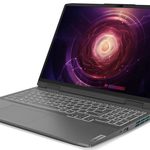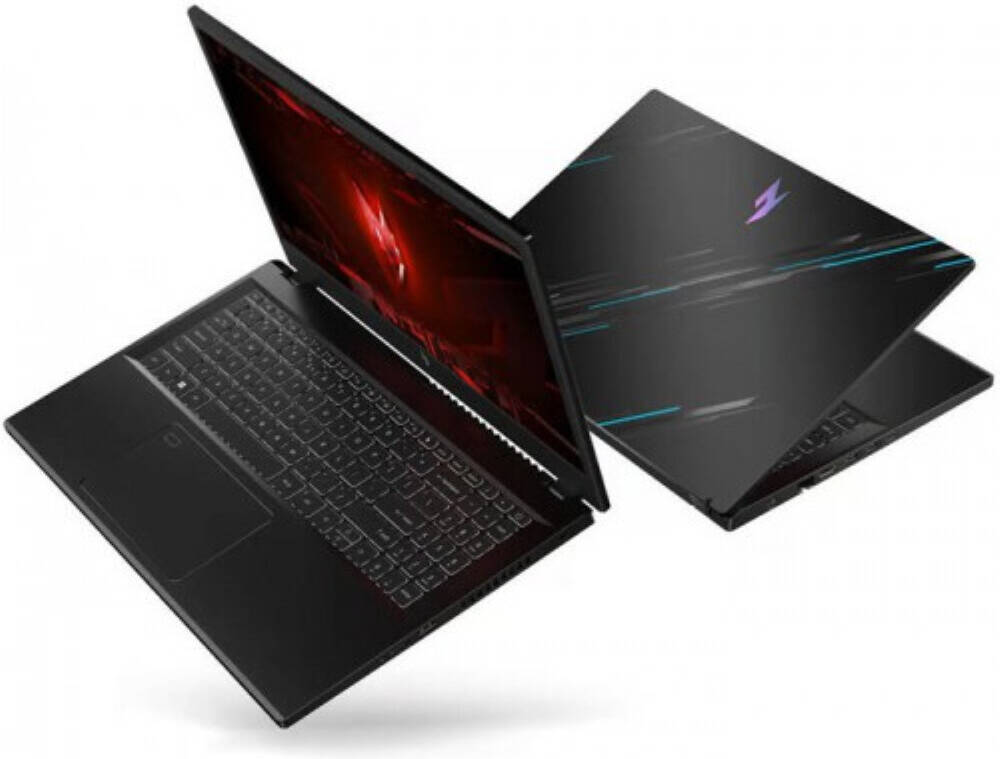
Image Source: Acer Official
Who Is It For?
The Nitro V 15 keeps a 15.6-inch screen and a separate 135 W brick on a fixed desk for evening competitive matches or short video timelines after work. A student who leaves the machine on a dorm desk for daytime notes and switches to the discrete graphics for night sessions fits the daily pattern this chassis supports. A home user who edits short clips or runs a local game server while browser tabs stay open also matches the stationary flow. The roughly 2.1 kg body plus the brick makes repeated campus walks or room-to-room carries less practical than a pure desk routine. Two SO-DIMM slots let memory capacity change later, and many units include a second M.2 bay so storage can grow without full drive replacement. The 57–59 Wh pack sustains light browser or document work for several hours away from the wall, yet any sustained graphics load ends that window quickly. If this form factor or power doesn’t quite fit your daily work, exploring other lineup categories would be a better path.
1. 135 W Brick, Dual Slots, and Fixed Panel Choices
Dedicated 135 W brick versus limited USB-C power
The series ships with a barrel-connector 135 W adapter that must remain plugged in for the graphics chip to reach its full power limit. USB-C Power Delivery exists on certain ports but stays well below the combined CPU-plus-GPU draw needed for gaming or rendering. On a desk this leaves one permanent extra cable; any attempt to run high-load titles or exports from a portable charger alone forces the discrete graphics into a restricted state. Confirm the exact adapter wattage listed on the sales page for the chosen configuration.
Two SO-DIMM sockets and dual M.2 layout
Memory sits in two removable SO-DIMM sockets that accept DDR5 or DDR4 modules up to a combined 32 GB on most boards. Storage frequently includes two M.2 bays—one PCIe Gen4 primary and one Gen3 secondary—so capacity can expand by adding a second drive rather than swapping the original. After purchase an owner can raise RAM for larger project files or more open tabs, and game libraries or video archives can grow without removing the factory SSD. Check the product page to see whether both memory sockets and both drive bays are already occupied.
15.6-inch panel locked at purchase
Screen options stay fixed once ordered: 1920×1080 IPS panels running at 144 Hz, 165 Hz, or 180 Hz depending on the SKU. The lid does not detach or tilt beyond the hinge range. Color coverage and brightness remain those of the selected panel for the life of the machine. Anyone needing higher resolution or wider color must rely on the HDMI 2.1 or USB-C DisplayPort output. Verify the exact resolution and refresh rate printed on the sales listing before ordering.
These physical limits keep full graphics power tied to the wall outlet and lock the internal display choice for the ownership period.
2. Desk Footprint, Bottom Intake, and Carry Weight
23.5 mm thickness and rear clearance on a narrow surface
The chassis measures roughly 362 × 240 × 23.5 mm. On a small café table or folding desk the rear vents and the 135 W brick leave little free surface for a mouse. The 15.6-inch lid needs clear depth in front of the keyboard so the screen can open fully without striking a wall or secondary monitor stand. Daily placement therefore favors a dedicated desk rather than shared or temporary ones.
Underside intake under sustained load
Cooling air enters through the bottom panel and exits at the rear hinge and side vents. Soft bedding, a thick sleeve, or a closed bag blocks the intake and drives internal temperatures up within minutes of graphics activity. On a hard desk the fans ramp under prolonged load and become audible in a quiet room; they stay quieter during light browser or document work. The plastic underside also transfers heat to the surface beneath it during long sessions.
2.1 kg notebook plus brick for any move
The machine alone weighs about 2.1 kg. Adding the 135 W adapter and cable pushes the total past 2.5 kg. A short walk between rooms remains manageable; repeated daily transit in a backpack across a campus or commute adds noticeable mass and requires a sleeve large enough for the 15.6-inch lid. The 57–59 Wh battery covers several hours of mixed office work but empties far sooner once the discrete graphics engage, so any mobile session still needs the brick nearby for serious tasks.
3. Performance by Use Case
Mid-range configurations pair an Intel Core i5 or i7 H-series (or AMD Ryzen 5/7 equivalent) with an RTX 4050, 4060 or 5050 Laptop GPU limited to roughly 75 W TGP. All heavy graphics work assumes the 135 W adapter is connected; battery mode sharply restricts the discrete chip.
| Use Case | Software | Rating | Reason |
|---|---|---|---|
| 1080p competitive gaming | Valorant, CS2, Fortnite | Sufficient | Full TGP sustains high frame rates while plugged in |
| 1080p AAA titles | Cyberpunk, modern games with DLSS | Adequate | 75 W limit and 6–8 GB VRAM keep playable settings with upscaling |
| Short multi-stream editing | Premiere, DaVinci Resolve | Adequate | Timeline playback holds when powered; battery drains rapidly |
| Coding and browser multitasking | VS Code, Chrome, Docker | Sufficient | Dual-channel RAM and CPU cores handle concurrent loads |
| Battery-only heavy gaming or export | Any GPU-intensive title or render | Not enough | Discrete GPU power collapses and runtime shrinks to a short window |
Lower GPU options or single-channel 16 GB RAM configurations reduce the margin on the middle three rows.
4. Official Specs (with plain explanations)
| Category | Specification | Notes |
|---|---|---|
| Display | 15.6″ FHD 144/165/180 Hz IPS | Fixed at purchase; matte finish |
| Processor | Up to Intel Core i7-13620H / Core 7 240H or AMD Ryzen 7 equivalents | Soldered; generation varies by SKU |
| Graphics | RTX 4050 / 4060 / 5050 Laptop GPU | Up to ~75 W TGP with Dynamic Boost |
| Memory | 2× SO-DIMM DDR5 or DDR4, max typically 32 GB | Removable sticks |
| Storage | Up to 2× M.2 NVMe (Gen4 + Gen3 common) | Dual-bay layout on many units |
| Battery | 57–59 Wh 4-cell | User-accessible on most boards |
| Adapter | 135 W | Separate brick required for full power |
| Weight | ~2.1 kg | With battery |
| Ports | 3× USB-A, 1× USB-C (DP + limited PD), HDMI 2.1, Ethernet | Side-mounted |
This series is sold with different CPUs, memory, and storage depending on the release year and generation. Please match the specifications on your current seller page with the official information above.
Source: Acer Official Product Page
The dual M.2 layout and 135 W brick listed above directly set later upgrade paths and the permanent desk cable.
5. Main Variations in This Series
GPU choice among RTX 4050, 4060 and 5050 changes sustained frame rates and export speed once the machine is plugged in. Screen selection among 144 Hz, 165 Hz and 180 Hz FHD panels alters motion clarity for the life of the unit. Starting RAM of 8 GB or 16 GB versus dual-channel 32 GB affects how many browser tabs or project layers stay open before swapping begins. CPU options from i5/Ryzen 5 to i7/Ryzen 7 alter multi-core rendering and compile times. Each of these choices is fixed after purchase except for the two SO-DIMM modules and the second M.2 bay where present.
6. What to Check on the Sales Page
Confirm the exact hardware listed for the SKU you are considering, because the same series name covers multiple generations and graphics levels.
- CPU Generation: Check whether you are getting the 13th-generation H-series, newer Core 5/7 H, or AMD Ryzen equivalents.
- GPU model and listed TGP so the ~75 W ceiling is clear.
- Whether both SO-DIMM slots are already filled and the number of M.2 bays present.
- Exact screen resolution and refresh rate (FHD 144 Hz, 165 Hz or 180 Hz).
- Included adapter wattage and battery rating of 57–59 Wh.
Matching these five items against the official sheet prevents receiving a lower-power or older configuration under the same series name.
7. Disclaimer & Buying Advice
This buying guide for the Nitro V 15 is based on official manufacturer specifications and recurring real-world user experiences. It is completely independent, not sponsored, and does not guarantee specific performance for every unit. Hardware configurations such as the processor, memory, and storage can differ by generation and region, so please double-check the exact specifications listed on your seller’s page before purchasing.
8. Beginner Guide
The mandatory 135 W brick and the dual-slot layout set the daily power and upgrade boundaries of this series more than any other factor. Start Here walks through how those fixed constraints interact with common desk and light-carry patterns before any purchase decision.