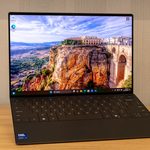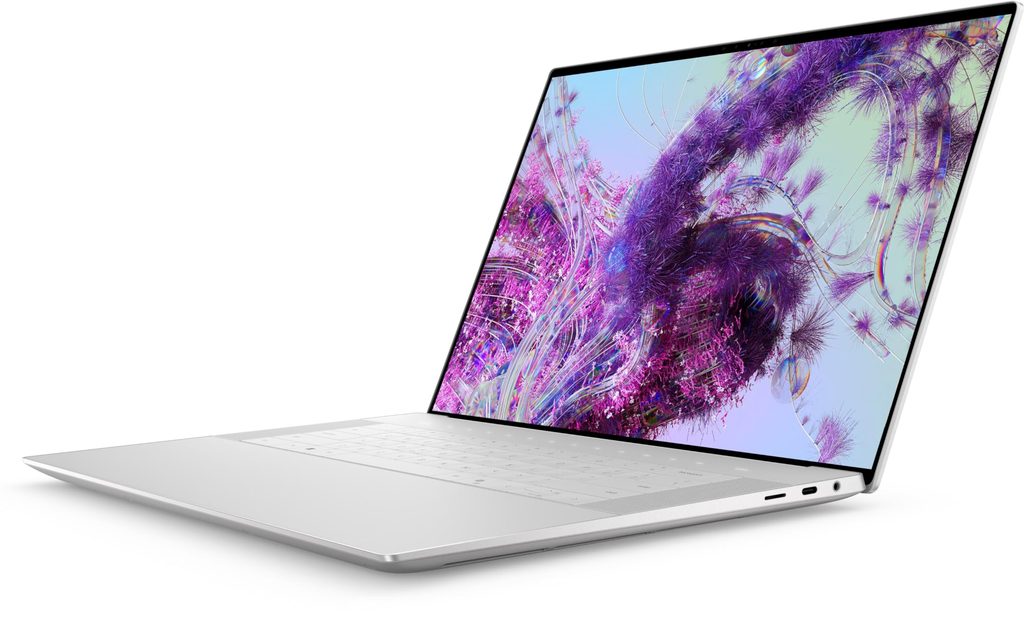
Image Source: Dell Official
Who Is It For?
The Dell XPS 16 is for individuals who prioritize a modern aesthetic and high-quality materials in a large-screen portable computer. It fits the needs of creative professionals who require a color-accurate display for photo or video work and a large battery for long sessions away from a power outlet. The design is suited for those who prefer a minimalist workspace and are comfortable using USB-C adapters for their existing peripherals. It is not for those who need to frequently upgrade their hardware or for those who find capacitive touch controls and invisible touchpads difficult to navigate.
“If this form factor or power doesn’t quite fit your daily work, exploring other lineup categories would be a better path.”
1. Check Before You Buy
The Dell XPS 16 is a large-format slim laptop that introduces several unconventional design elements. These features change the physical interaction between the user and the machine compared to traditional laptops. The most prominent change is the capacitive touch function row located above the keyboard. Instead of physical buttons for volume, brightness, or the Escape key, this area uses a flat glass surface with illuminated icons. These icons remain lit during use, but they do not provide physical movement or tactile feedback when pressed. This requires the user to look at the row to ensure the correct icon is being activated.
The Seamless Glass Palm Rest and Invisible Touchpad
The entire area below the keyboard is covered by a single sheet of Gorilla Glass 3. There are no visible lines or borders to indicate where the touchpad begins or ends. The touchpad is located in the center and uses haptic motors to simulate the sensation of a click. Because there are no physical edges, moving a finger outside the active tracking area results in the cursor stopping on the screen. This design requires a period of adjustment to memorize the boundaries of the touch-sensitive zone. The glass surface also extends to the edges of the laptop, creating a smooth area for the palms that does not have the traditional seams found on plastic or metal laptops.
Memory and Internal Expansion Limits
The internal architecture of the XPS 16 prioritizes a thin profile, which results in the memory being soldered directly to the motherboard. There are no SO-DIMM slots available for future upgrades. If a task requires more than 16GB of RAM in the future, the only solution is to replace the entire laptop. The storage is handled by a single M.2 slot. While the SSD can be replaced with a higher-capacity drive, the presence of only one slot means that adding a second drive for extra space is not possible. Users must either replace the existing drive and reinstall the operating system or rely on external storage solutions.
Port Selection and Connectivity
The physical ports on the XPS 16 are limited to three Thunderbolt 4 (USB-C) connections, a MicroSD card reader, and a headphone jack. There are no USB-A ports or HDMI outputs built into the chassis. Dell typically includes a small USB-C to USB-A and HDMI adapter in the box, but this must be carried separately. Connecting a standard mouse, a thumb drive, or an external monitor requires the use of these adapters or a dedicated docking station. The Thunderbolt 4 ports are distributed on both sides of the laptop, allowing for charging from either the left or the right side.
Thermal Management and Performance Scaling
The XPS 16 uses a dual-fan cooling system with a vapor chamber in higher-end configurations. However, the slim design limits the amount of air that can be moved through the system. When the NVIDIA RTX 4070 and the Intel Core Ultra 9 are used simultaneously for heavy tasks, the system reduces the clock speeds of the components to manage internal heat. This means the performance in long rendering tasks or gaming sessions will be lower than that of a thicker gaming laptop with the same specifications. The fans are audible under load, but the sound is tuned to a lower frequency to minimize high-pitched whistling.
2. How It Fits a Real Desk Setup
Desk Space, Keyboard and Display Experience
The Dell XPS 16 occupies a significant amount of space on a desk due to its 16.3-inch display and wide palm rest. The chassis is made from CNC-machined aluminum, which provides a rigid structure that does not flex when picked up by one corner. On a desk, the laptop sits low, and the rubber feet on the bottom provide a slight tilt for typing. The “zero-lattice” keyboard features large keycaps with almost no space between them. This design maximizes the surface area of each key but may lead to accidental presses for those accustomed to keys with wider gaps.
The 16:10 aspect ratio of the screen provides more vertical space than a standard widescreen laptop. This is useful for viewing long documents or editing timelines in video software. If the OLED version is chosen, the glossy screen will reflect light from windows or overhead lamps. The brightness of 400 to 500 nits is sufficient for indoor use, but the reflections are visible in dark scenes. The speakers are located on either side of the keyboard, firing upward. This placement ensures that the audio is clear and not muffled by the desk surface, providing a wide soundstage for media consumption.
Docking Setup, Battery Life and Portability
In a professional environment, the lack of traditional ports means that a desk setup often requires a Thunderbolt dock. A single cable from the dock can provide power, connect multiple monitors, and provide USB-A ports for peripherals. Without a dock, the desk can become cluttered with various dongles and adapters hanging from the sides of the laptop. The 99.5Wh battery is the largest size allowed on commercial flights, making it a high-capacity option for those who work away from a desk. However, the high-resolution OLED screen and dedicated GPU will deplete this battery faster than the FHD+ model with integrated graphics.
The weight of approximately 2.2 kg is noticeable when carrying the laptop in a bag. While it is thinner than many 16-inch laptops, the density of the aluminum and glass makes it feel heavy. The power adapter is a 130W USB-C brick that is relatively compact, but it adds to the total travel weight. The webcam is a 1080p sensor located in the thin top bezel, and it supports Windows Hello facial recognition for logging in without a password. There is also a fingerprint reader built into the power button, which is located at the top right of the keyboard.
3. Performance by Use Case
The following ratings are based on a configuration with an Intel Core Ultra 7, 32GB of RAM, and an NVIDIA RTX 4060 GPU.
| Use Case | Software | Rating | Reason |
| Graphic Design | Photoshop, Illustrator | Sufficient | High color accuracy and 32GB RAM handle large canvas sizes. |
| Video Editing | Premiere Pro, 4K Export | Sufficient | Dedicated GPU and AI NPU accelerate rendering and effects. |
| Office Work | Excel, Chrome, Teams | Sufficient | Large 16:10 screen and fast CPU support heavy multitasking. |
| 3D Rendering | Blender, V-Ray | Adequate | Thermal limits in the slim chassis reduce long-term render speeds. |
| AAA Gaming | Cyberpunk 2077 | Adequate | RTX 40-series supports DLSS, but frame rates are lower than gaming PCs. |
| Portability | Daily Commute | Adequate | The 2.2kg weight and 16-inch size require a large, sturdy bag. |
The performance of the XPS 16 is highly dependent on the thermal environment. Using the laptop on a hard, flat surface allows the fans to pull air through the bottom vents more effectively than using it on a soft surface like a bed or a lap.
4. Official Specs (with plain explanations)
| Category | Specification | Notes |
| CPU | Intel Core Ultra 7 155H / Ultra 9 185H | Integrated AI NPU, efficiency-focused architecture |
| Graphics | Intel Arc or NVIDIA RTX 4050/4060/4070 | Dedicated GPU options vary by power level |
| Memory | 16GB / 32GB / 64GB LPDDR5x | Soldered to motherboard, no expansion slots |
| Storage | 512GB to 4TB PCIe 4.0 SSD | Single internal slot, replaceable drive |
| Display | 16.3″ FHD+ (500 nits) or 4K+ OLED Touch | Glossy or matte options, 120Hz refresh |
| Weight | 2.13 kg (FHD+) / 2.20 kg (OLED) | CNC aluminum chassis, glass palm rest |
| Battery | 99.5Wh | Maximum capacity allowed for air travel |
| Ports | 3x Thunderbolt 4, MicroSD, 3.5mm jack | USB-C only, requires adapters for USB-A/HDMI |
This series is sold with different CPUs, memory, and storage depending on the release year and generation. Please match the specifications on your current seller page with the official information above.
Source: Dell Official Product Page
The specifications listed above represent the hardware foundation of the XPS 16. These components determine the physical weight of the device, the clarity of the visual output, and the speed at which the system processes data during daily operations.
5. Main Variations in This Series
- The display comes in two distinct types: a non-touch FHD+ panel with a matte finish and a 4K+ OLED touchscreen with a glossy glass surface.
- Graphics configurations range from integrated Intel Arc graphics to dedicated NVIDIA RTX 40-series GPUs with varying power limits.
- Memory is fixed at the time of purchase, with options for 16GB, 32GB, or 64GB, and cannot be increased later due to the soldered design.
- The processor options include the Intel Core Ultra 7 and Ultra 9, both of which feature a dedicated neural processing unit for AI-related tasks.
- The chassis color is available in Platinum or Graphite, which changes the visual appearance of the aluminum exterior and the glass interior.
6. What to Check on the Sales Page
When purchasing an XPS 16, the configuration details are critical because the most important components cannot be changed after the laptop is delivered.
- CPU Generation: Check whether you are getting the Intel Core Ultra 7 or Ultra 9 processors.
- Memory Capacity: Confirm if the RAM is 16GB, 32GB, or 64GB, as this is soldered and non-upgradable.
- Display Type: Verify if the screen is the “FHD+ Non-Touch” or the “4K+ OLED Touch” panel.
- GPU Model: Check if the laptop includes “Intel Arc” (integrated) or “NVIDIA RTX” (dedicated) graphics.
- Storage Size: Confirm the SSD capacity, as there is only one slot available for the drive.
The sales page may also list different warranty options and included software, which should be reviewed based on individual needs.
7. Disclaimer & Buying Advice
This buying guide for the Dell XPS 16 is based on official manufacturer specifications and recurring real-world user experiences. It is completely independent, not sponsored, and does not guarantee specific performance for every unit. Hardware configurations such as the processor, memory, and storage can differ by generation and region, so please double-check the exact specifications listed on your seller’s page before purchasing.
8. Beginner Guide
If you are new to high-end laptops and want to understand how these features impact your daily tasks, you can [Start Here] to explore our basic hardware guides.