Image Source: Tech Reviewer / Hands-on Photo
Who Is It For?
The Dell Inspiron 14 is for individuals who need a portable laptop for daily productivity but find 13-inch screens too small and 16-inch laptops too heavy. It fits the needs of students who carry their computer to classes and office workers who manage documents, emails, and web-based applications. The 16:10 screen and centered keyboard make it a tool for those who spend several hours a day typing and reading. It is not for those who require a high-brightness screen for outdoor work or for professional gamers who require high-refresh-rate screens and high-wattage graphics cards.
“If this form factor or power doesn’t quite fit your daily work, exploring other lineup categories would be a better path.”
1. Check Before You Buy
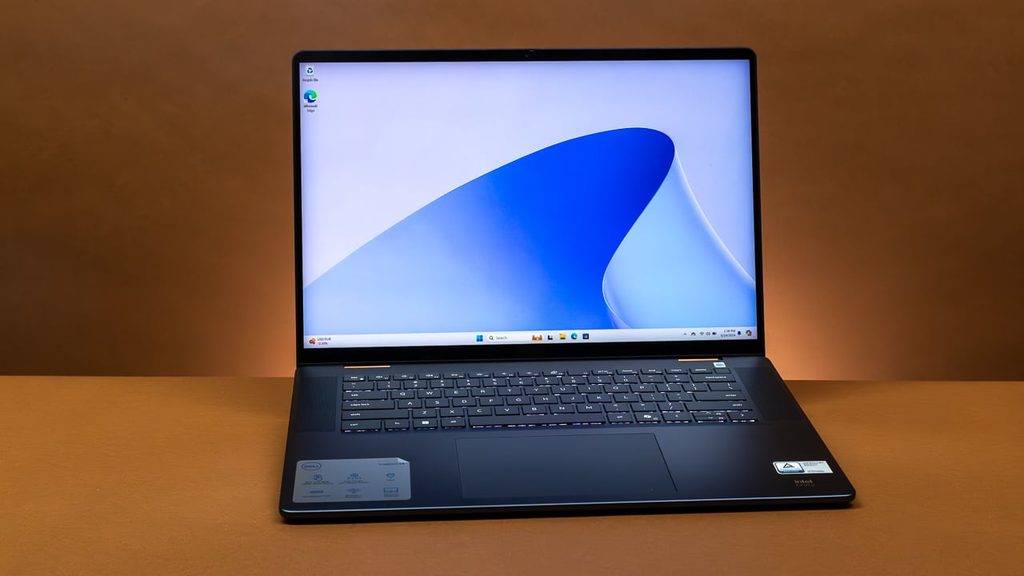
The Dell Inspiron 14 is a 14-inch laptop that occupies a middle ground between smaller 13-inch ultraportables and larger 15-inch or 16-inch productivity machines. Dell achieves this 14-inch screen size using a 16:10 aspect ratio, which makes the display taller than traditional widescreen laptops. Therefore, when you open a document or a website, you can see more lines of text without scrolling. However, the 14-inch footprint remains a permanent characteristic of the series and influences how the device fits on small surfaces like airplane trays or coffee shop tables.
Memory Architecture and Upgradeability
You must verify a significant technical detail on the sales page: the memory (RAM) configuration. In many models within the Inspiron 14 series, such as the 5430 or the 7430 2-in-1, Dell solders the memory directly to the motherboard. This design allows the laptop to be thinner, but it removes your ability to add more RAM later. Therefore, if a listing shows 8GB of LPDDR5 memory, you must accept that capacity as permanent. Other models, like the 5440, feature two physical SO-DIMM slots that allow you to remove the existing sticks and install higher-capacity ones. Confirming whether the memory is soldered or upgradeable before finalizing a purchase will save you from future performance limits.
Screen Brightness and Environment
Dell often rates the standard display for this series at 250 nits of brightness. In a typical indoor office or a room with controlled lighting, this brightness level offers comfortable reading and writing. However, if you use the laptop in a very bright environment, such as next to a large window with direct sunlight or outdoors, the screen appears dim and hard to see. The matte finish on the clamshell models diffuses reflections from overhead lights, but it does not increase the actual panel brightness. The 2-in-1 models feature a glossy glass screen, which produces more vibrant colors but reflects light sources more clearly than the matte versions.
2-in-1 vs. Standard Clamshell Design
The Inspiron 14 series includes both standard laptops and 2-in-1 hybrids. The 2-in-1 models feature a 360-degree hinge and a touchscreen covered in glass. This design allows the device to be used in “tent mode” for watching videos or “tablet mode” for drawing with a stylus. However, the 2-in-1 models are typically heavier than the standard clamshell versions due to the extra weight of the glass and the reinforced hinges. The glass screen also adds thickness to the lid. Choosing between these two designs is a decision about physical interaction; the 2-in-1 offers touch and stylus support, while the clamshell is lighter and has a matte screen that reduces glare.
Thermal Design and Fan Behavior
The Inspiron 14 uses a “lift hinge” design where the back of the laptop rises slightly when the screen is opened. This creates a small gap between the bottom of the laptop and the desk surface, allowing the internal fan to pull in air more effectively. During basic tasks like web browsing or typing, the fan remains at a low speed or stays off. When the processor is under a heavy load, such as during a system update or when many browser tabs are open, the fan speed increases. The exhaust vent is located near the hinge, so warm air is pushed toward the bottom of the screen. This results in the area above the keyboard becoming warm to the touch during sustained use.
2. How It Fits a Real Desk Setup
The Dell Inspiron 14 occupies a footprint of approximately 31.4 cm by 22.7 cm. On a standard desk, this leaves ample room for a mouse, a notebook, and other peripherals. Users often view the 14-inch size as a practical balance between screen real estate and desk space. Dell removes the dedicated numeric keypad from this model to keep the main typing area and the touchpad centered on the chassis. Therefore, this centered layout provides a symmetrical typing experience that aligns your hands and body with the middle of the screen.
Typing and Input Experience
The keyboard features a 1.5mm key travel, which provides a tactile response when typing. Because the chassis is 14 inches wide, the keys are standard-sized and not cramped. The power button is located at the top right of the keyboard and often doubles as a fingerprint reader for secure login. On a desk, the lift hinge provides a slight tilt to the keyboard, which changes the angle of the wrists during typing. The palm rest area is made of a mix of aluminum and plastic, providing a stable surface for the wrists to sit fully on the laptop during long typing sessions.
Audio and Visual Communication
The speakers are located on either side of the keyboard, firing upward toward the user. This placement prevents the sound from being muffled by the desk or a lap, resulting in clearer audio for video calls and media. The webcam is a 1080p sensor, which provides a sharper image than the 720p cameras found on older or entry-level laptops. A physical privacy shutter is built into the webcam housing, allowing the user to slide a plastic cover over the lens when the camera is not in use. This provides a physical guarantee that the camera is blocked without needing to use tape or external covers.
Cable Management and Connectivity
Most of the ports are located on the left side of the laptop, including the power input, HDMI, and USB-C. The right side typically houses a USB-A port and the SD card reader. This layout means that most cables will be concentrated on the left side of the desk, which is beneficial for right-handed mouse users as it keeps the right side clear of obstructions. The full-size SD card reader is a physical slot that allows for the direct insertion of memory cards from cameras, eliminating the need for an external dongle for photo transfers. The USB-C port on Intel models supports Thunderbolt 4, allowing for charging and video output through a single cable.
Portability and Daily Travel
At a weight of approximately 1.5 kg to 1.6 kg, the Inspiron 14 is light enough to be carried in a standard backpack or a large tote bag. It is designed for users who move between a home office, a classroom, and a library. The aluminum lid provides a rigid feel that protects the screen from pressure when the laptop is inside a bag, but the plastic base is more susceptible to scratches if placed on rough surfaces. The 65W power adapter is a standard brick with a long cable, adding to the total weight in a backpack. The battery life is sufficient for several hours of document work, but the 54Wh battery will deplete faster if the screen brightness is set to maximum or if video conferencing software is used continuously.
3. Performance by Use Case
The following ratings are based on a middle-tier configuration featuring an Intel Core i5 or Ryzen 5 processor and 16GB of RAM.
| Use Case | Software | Rating | Reason |
| Office Work | Excel, Word, Outlook | Sufficient | 16:10 screen and 16GB RAM handle large documents and many tabs. |
| Web Browsing | Chrome, Edge (20+ tabs) | Sufficient | Modern processors allow for smooth switching between many open tabs. |
| Video Calls | Zoom, Microsoft Teams | Sufficient | 1080p webcam and upward-firing speakers provide clear communication. |
| Photo Editing | Photoshop, Lightroom | Adequate | Sufficient for basic edits, but 250 nits brightness is a limit. |
| Video Editing | 1080p Simple Cuts | Adequate | Can handle basic video tasks, but slow for 4K or complex effects. |
| AAA Gaming | Modern Heavy Titles | Not enough | Integrated graphics cannot run modern heavy games at high settings. |
The performance of the Inspiron 14 is consistent for daily productivity. However, because it is a slim laptop with a single fan, it is not intended for sustained high-load tasks like 24/7 video rendering, which may lead to the fan running at maximum speed and the processor slowing down to manage heat.
4. Official Specs (with plain explanations)
| Category | Specification | Notes |
| CPU | Intel Core i3 to i7 or AMD Ryzen 5 to 7 | 13th/14th Gen Intel or 7000/8000 AMD |
| Graphics | Integrated Intel or AMD Graphics | Shared system memory, no separate video card |
| Memory | 8GB to 16GB LPDDR5 or DDR5 | Soldered or slots depending on the model |
| Storage | 256GB to 1TB M.2 PCIe NVMe SSD | Single internal replaceable drive slot |
| Display | 14-inch FHD+ (1920×1200) | 16:10 aspect ratio, matte or touch options |
| Weight | 1.53 kg to 1.62 kg (3.37 to 3.57 lbs) | Aluminum and plastic hybrid chassis construction |
| Battery | 54Wh or 64Wh | Integrated battery, supports ExpressCharge technology |
| Ports | HDMI, USB-C, USB-A, SD Card Reader | Standard physical connection array for peripherals |
This series is sold with different CPUs, memory, and storage depending on the release year and generation. Please match the specifications on your current seller page with the official information above.
Source: Dell Official Product Page
The specifications listed above represent the hardware components that define the physical size and technical limits of the Inspiron 14. These parts determine how much information the screen can show at once, how heavy the device feels in a bag, and how the system handles multiple open applications.
5. Main Variations in This Series
- Dell divides the processor architecture between Intel Core and AMD Ryzen models, which changes the internal graphics system and USB-C speeds.
- Memory configurations vary significantly; some models feature soldered LPDDR5 memory that you cannot upgrade, while others include DDR5 slots for future expansion.
- The chassis design offers two options: a standard clamshell version and a 2-in-1 version with a 360-degree hinge that folds into a tablet.
- Display panels differ in brightness, as standard FHD+ panels offer 250 nits while higher-tier panels provide 300 nits or touch support.
- The battery capacity ranges from 54Wh to 64Wh, which alters the total weight and overall unplugged battery life.
6. What to Check on the Sales Page
When reviewing a listing for the Inspiron 14, the specific model number and the internal components will determine the actual performance and longevity of the machine.
- CPU Generation: Check whether you are getting the 13th/14th Gen Intel or the 7000/8000 series AMD processors.
- Memory Type: Confirm if the RAM is “LPDDR5” (soldered) or “DDR5” (slots) to know if you can upgrade it later.
- Design Type: Verify if the model is a “Standard Clamshell” or a “2-in-1” hybrid with a touchscreen.
- Screen Brightness: Verify if the panel is rated at 250 nits or 300 nits, especially if you work in bright rooms.
- Battery Capacity: Confirm if the unit includes the 54Wh or the larger 64Wh battery for longer unplugged use.
The sales page may also list the specific version of Windows included, which is typically Windows 11 Home or Pro.
7. Disclaimer & Buying Advice
This buying guide for the Dell Inspiron 14 is based on official manufacturer specifications and recurring real-world user experiences. It is completely independent, not sponsored, and does not guarantee specific performance for every unit. Hardware configurations such as the processor, memory, and storage can differ by generation and region, so please double-check the exact specifications listed on your seller’s page before purchasing.
8. Beginner Guide
If you are setting up a new laptop for the first time and want to understand how to manage your battery and screen settings, you can [Start Here] to read our basic hardware and setup guides.