Image Source: Tech Reviewer / Hands-on Photo
Who Is It For?
The Dell XPS 14 is for individuals who prioritize a modern, minimalist aesthetic and high-quality construction in a portable size. It fits the needs of mobile professionals and students who require a screen larger than 13 inches but want to avoid the bulk of a 16-inch machine. The inclusion of a 120Hz display and an optional dedicated GPU makes it a tool for those who perform light creative work, such as photo editing or social media content creation. It is not for those who need to connect many legacy USB-A devices without adapters, nor is it for those who require a laptop with user-upgradable memory.
“If this form factor or power doesn’t quite fit your daily work, exploring other lineup categories would be a better path.”
1. Check Before You Buy
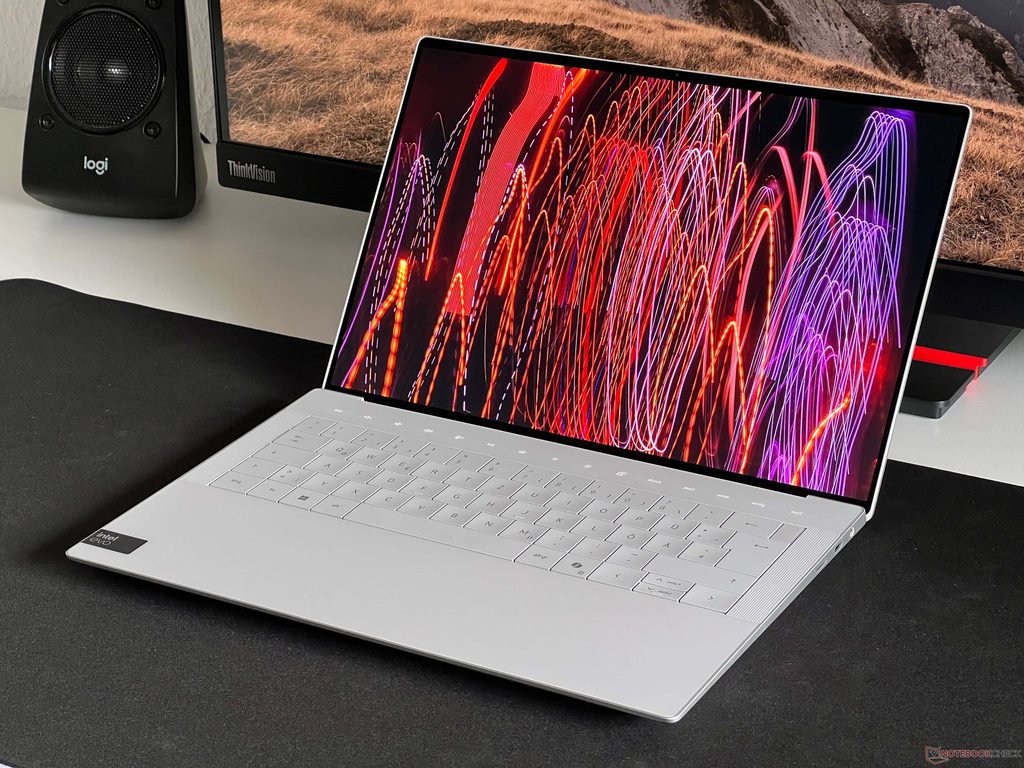
The Dell XPS 14 is a 14.5-inch laptop that introduces a specific set of physical design choices that differ from traditional portable computers. These changes affect how a person interacts with the keyboard, the touchpad, and the function keys. The most significant change is the use of a single, continuous sheet of Gorilla Glass 3 across the entire palm rest area. This design removes the visible lines and physical borders that typically define where the touchpad is located.
The Invisible Haptic Touchpad and Glass Palm Rest
The touchpad on the XPS 14 is located in the center of the glass palm rest, but it has no physical edges or indentations. It uses haptic motors to simulate the sensation of a click when pressure is applied. Because there is no visual guide, a person must learn the boundaries of the touch-sensitive area through repeated use. If a finger moves too far to the left or right, the cursor on the screen will stop moving because the finger has left the active tracking zone. The glass surface is smooth and resists physical wear, but it does not provide the tactile feedback of a traditional mechanical button.
Capacitive Touch Function Row
Above the physical keyboard, the traditional row of plastic function keys (F1 through F12) has been replaced by a capacitive touch row. This is a flat glass strip with illuminated icons that toggle between media controls and standard function keys. These icons do not move when pressed and do not provide haptic feedback. The icons remain lit while the laptop is in use, but they require the user to look down at the row to ensure the correct “button” is being pressed. This design choice prioritizes a flat, modern appearance over the physical sensation of pressing a key.
Memory and Internal Expansion Constraints
The internal memory (RAM) is soldered directly to the motherboard to maintain the thin profile of the 18mm chassis. There are no physical slots to add more memory later. If the 16GB version is purchased and the user later finds that their software requires 32GB, the only solution is to replace the entire laptop. For storage, there is only one M.2 slot for a solid-state drive. While this drive can be replaced with a larger one, the presence of only one slot means that a second drive cannot be added for extra space. All data must reside on a single internal drive or an external storage device.
Port Selection and Connectivity
The XPS 14 features three Thunderbolt 4 (USB-C) ports, a MicroSD card reader, and a 3.5mm headphone jack. There are no USB-A ports or HDMI outputs built into the laptop. Connecting a standard mouse, a thumb drive, or an external monitor requires the use of a USB-C adapter or a docking station. Dell typically includes a small adapter in the box that provides one USB-A and one HDMI port, but this must be carried separately. The Thunderbolt 4 ports are distributed with two on the left and one on the right, allowing the laptop to be charged from either side.
2. How It Fits a Real Desk Setup
The Dell XPS 14 occupies a footprint that is slightly larger than a standard 13-inch laptop but smaller than a 15-inch model. The CNC-machined aluminum chassis is rigid and does not flex when the laptop is carried by one corner. On a desk, the laptop sits flat on two long rubber strips that run across the bottom. These strips provide a small amount of clearance for the cooling fans to pull in air. The weight of 1.7 to 1.8 kg makes it feel dense and solid, which prevents the base from lifting when the screen is opened with one hand.
The Zero-Lattice Keyboard and Typing Experience
The keyboard features a “zero-lattice” design, where the keycaps are large and have almost no space between them. This maximizes the surface area for each finger but changes the tactile experience for those used to keys with wider gaps. The key travel is 1.0mm, which is relatively shallow. On a desk, the typing sound is a quiet, low-pitched click. Because the palm rest is a single piece of glass, there are no seams where dust or skin oils can accumulate, making the interior surface easier to wipe clean compared to laptops with plastic or textured metal palm rests.
Display Characteristics and 120Hz Refresh Rate
The 14.5-inch screen uses a 16:10 aspect ratio, which provides more vertical space for reading documents or viewing websites than a standard 16:9 widescreen. Both the FHD+ and 3.2K OLED panels support a 120Hz refresh rate. This means the screen updates 120 times per second, making the movement of the mouse cursor and the scrolling of text appear smoother than on a standard 60Hz screen. The OLED version is glossy and will reflect light from windows or lamps, while the FHD+ version has a matte finish that diffuses reflections. The brightness of 400 to 500 nits is sufficient for indoor environments but may be difficult to see in direct sunlight.
Thermal and Acoustic Profile
The cooling system consists of two fans and a heat pipe system that exhausts air through the hinge area and the sides. During basic tasks like web browsing or document editing, the fans remain off or spin at a speed that is not audible in a typical room. When the processor or the NVIDIA GPU is under a heavy load, the fans ramp up to a consistent whirring sound. The aluminum chassis conducts heat, so the area above the capacitive touch row and the bottom of the laptop will become warm to the touch during long periods of high-intensity work.
Audio and Webcam Integration
The speakers are located on either side of the keyboard, firing upward toward the user. This placement ensures that the sound is clear and not muffled by the desk surface. The audio system provides a wider soundstage than smaller laptops, which is noticeable when watching videos or participating in calls. The webcam is a 1080p sensor located in the thin top bezel. it supports Windows Hello facial recognition, allowing the user to log in by simply looking at the screen. There is no physical privacy shutter for the webcam, but a small LED indicates when the camera is active.
3. Performance by Use Case
The following ratings are based on a configuration with the Intel Core Ultra 7, 32GB of RAM, and the NVIDIA RTX 4050 GPU.
| Use Case | Software | Rating | Reason |
| Office Productivity | Excel, Word, Outlook | Sufficient | 16-core CPU and 32GB RAM handle large datasets and many tabs. |
| Photo Editing | Lightroom, Photoshop | Sufficient | 120Hz OLED screen and dedicated GPU support fast image processing. |
| Video Editing | 1080p or light 4K | Sufficient | Dedicated GPU and AI NPU accelerate rendering and effects. |
| 3D Modeling | Blender, AutoCAD | Adequate | 30W TGP limit on the GPU restricts performance in complex scenes. |
| AAA Gaming | Modern Titles | Adequate | RTX 4050 can run games, but frame rates are limited by power caps. |
| Future Upgrades | Adding RAM | Not enough | Soldered memory prevents any internal hardware increases for RAM. |
The performance of the XPS 14 is consistent for daily tasks, but the slim design means the laptop will prioritize keeping temperatures under control over maintaining maximum processing speeds for several hours.
4. Official Specs (with plain explanations)
| Category | Specification | Notes |
| CPU | Intel Core Ultra 7 155H | 16-core processor with integrated AI NPU |
| Graphics | Intel Arc or NVIDIA RTX 4050 | Dedicated GPU option limited to 30W TGP |
| Memory | 16GB / 32GB / 64GB LPDDR5x | Soldered to motherboard, no expansion slots |
| Storage | 512GB to 4TB PCIe 4.0 SSD | Single internal M.2 slot, user-replaceable |
| Display | 14.5″ FHD+ (Non-touch) or 3.2K OLED | 120Hz refresh rate, 16:10 aspect ratio |
| Weight | 1.68 kg (FHD+) / 1.80 kg (OLED) | CNC aluminum chassis with glass interior |
| Battery | 69.5Wh | Integrated battery, supports 60W or 100W charging |
| Ports | 3x Thunderbolt 4, MicroSD, 3.5mm jack | USB-C only, requires adapters for USB-A/HDMI |
This series is sold with different CPUs, memory, and storage depending on the release year and generation. Please match the specifications on your current seller page with the official information above.
Source: Dell Official Product Page
The specifications listed above represent the hardware components that define the physical and technical capabilities of the XPS 14. These parts determine the weight of the device, the clarity of the screen, and the speed at which the system handles different types of software.
5. Main Variations in This Series
- Dell offers the display in two distinct options: a matte FHD+ panel (non-touch) and a glossy 3.2K OLED touchscreen with higher color contrast.
- Buyers can choose graphics between the integrated Intel Arc system and a dedicated NVIDIA RTX 4050 graphics card.
- Dell solders the memory directly to the motherboard at 16GB, 32GB, or 64GB, so you cannot upgrade it later.
- The chassis color options include Platinum and Graphite, which changes the visual tone of the aluminum exterior and the matching glass palm rest.
- The graphics option determines the charger wattage: models with the NVIDIA GPU come with a 100W USB-C adapter, while integrated models use a 60W adapter.
6. What to Check on the Sales Page
When viewing a listing for the XPS 14, the specific internal components are the most important details to verify, as the most critical parts cannot be changed after purchase.
- CPU Generation: Check whether you are getting the Intel Core Ultra 7 155H processor.
- Memory Capacity: Confirm if the RAM is 16GB, 32GB, or 64GB, as this is soldered and non-upgradable.
- Graphics Type: Verify if the laptop uses “Intel Arc” (integrated) or “NVIDIA RTX 4050” (dedicated) graphics.
- Display Resolution: Confirm if the screen is the “FHD+ Non-Touch” or the “3.2K OLED Touch” panel.
- Storage Size: Check the SSD capacity (512GB, 1TB, etc.) to ensure it meets your file storage requirements.
The sales page may also list the weight, which varies slightly depending on whether the OLED or FHD+ screen is selected.
7. Disclaimer & Buying Advice
This buying guide for the Dell XPS 14 is based on official manufacturer specifications and recurring real-world user experiences. It is completely independent, not sponsored, and does not guarantee specific performance for every unit. Hardware configurations such as the processor, memory, and storage can differ by generation and region, so please double-check the exact specifications listed on your seller’s page before purchasing.
8. Beginner Guide
If you are new to choosing a high-end laptop and want to understand how these technical features will impact your daily work, you can [Start Here] to learn the basics of modern computer hardware.